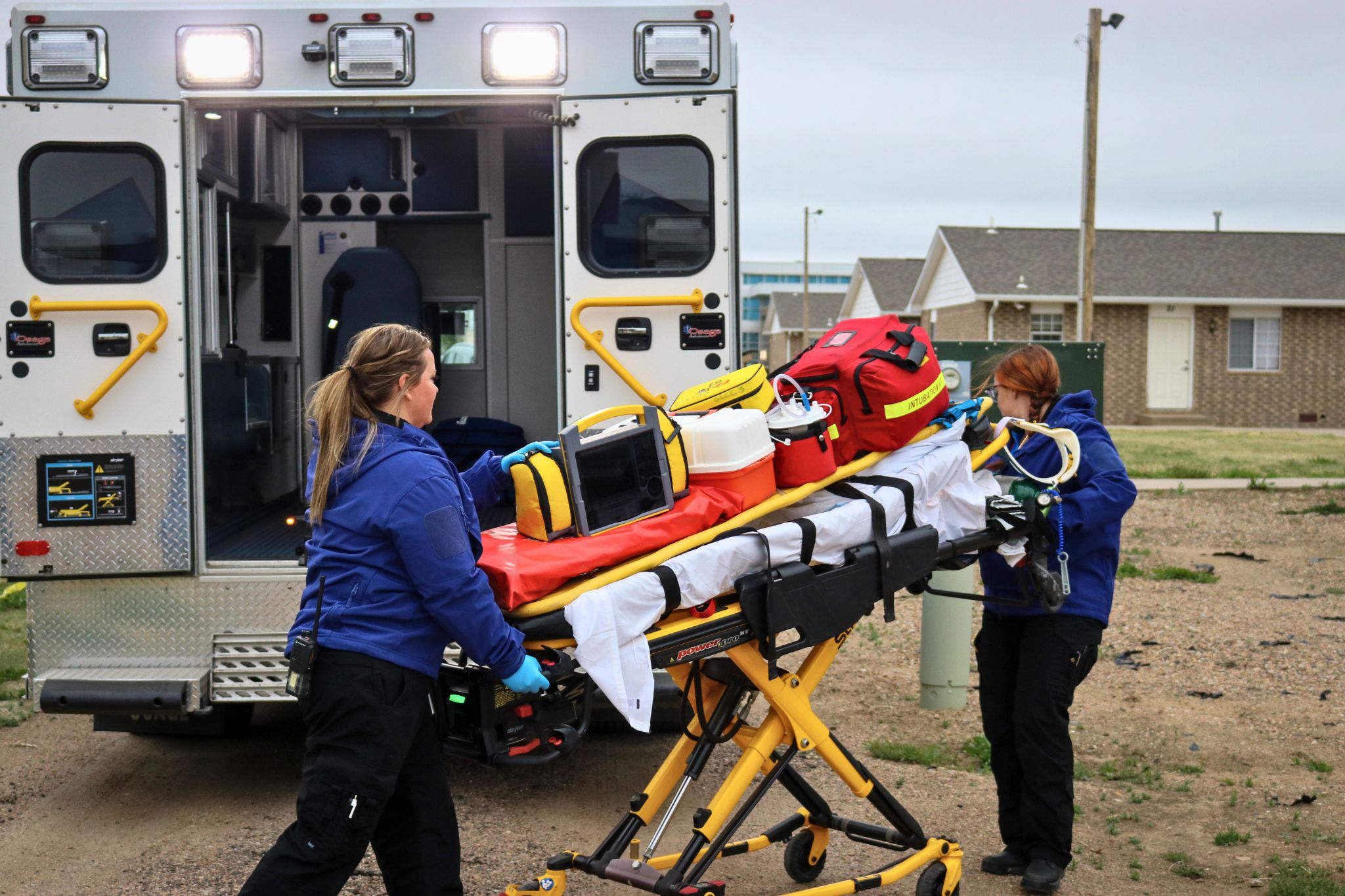
Take the next step in your emergency services career by mastering advanced life-saving
interventions, including advanced airway management, cardiac monitoring, and complex
pharmacology. Utilizing a flipped classroom model, you will transition from online
core content to a workplace-style classroom where you perfect clinical skills and
treatment modalities in a high-stakes environment.
Advanced Life-Saving Skills Students develop the knowledge and skills necessary to perform advanced emergency
interventions, including airway management, cardiac monitoring, and pharmacology.
Training emphasizes the application of these skills to provide safe, effective, entry-level
paramedic care across trauma, medical, and cardiac emergencies.
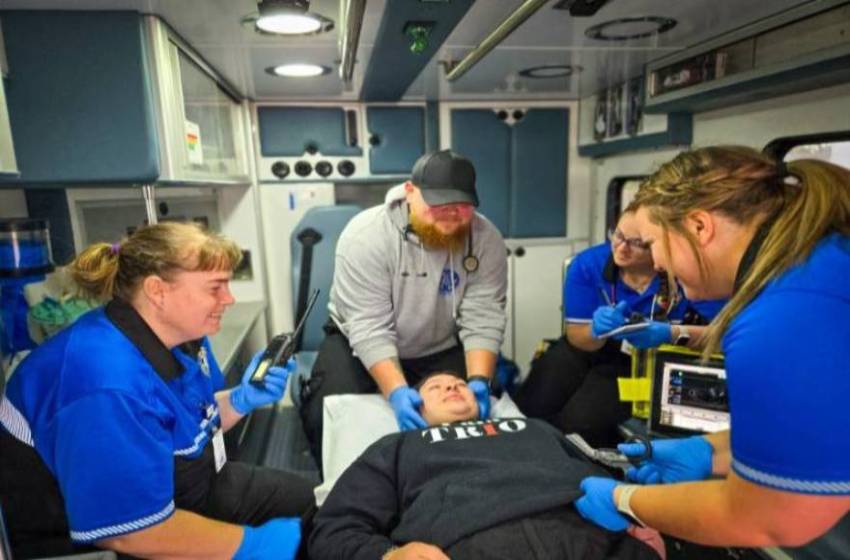
Immersive, Real-World Training The program combines the flexibility of online learning with hands-on, workplace-style
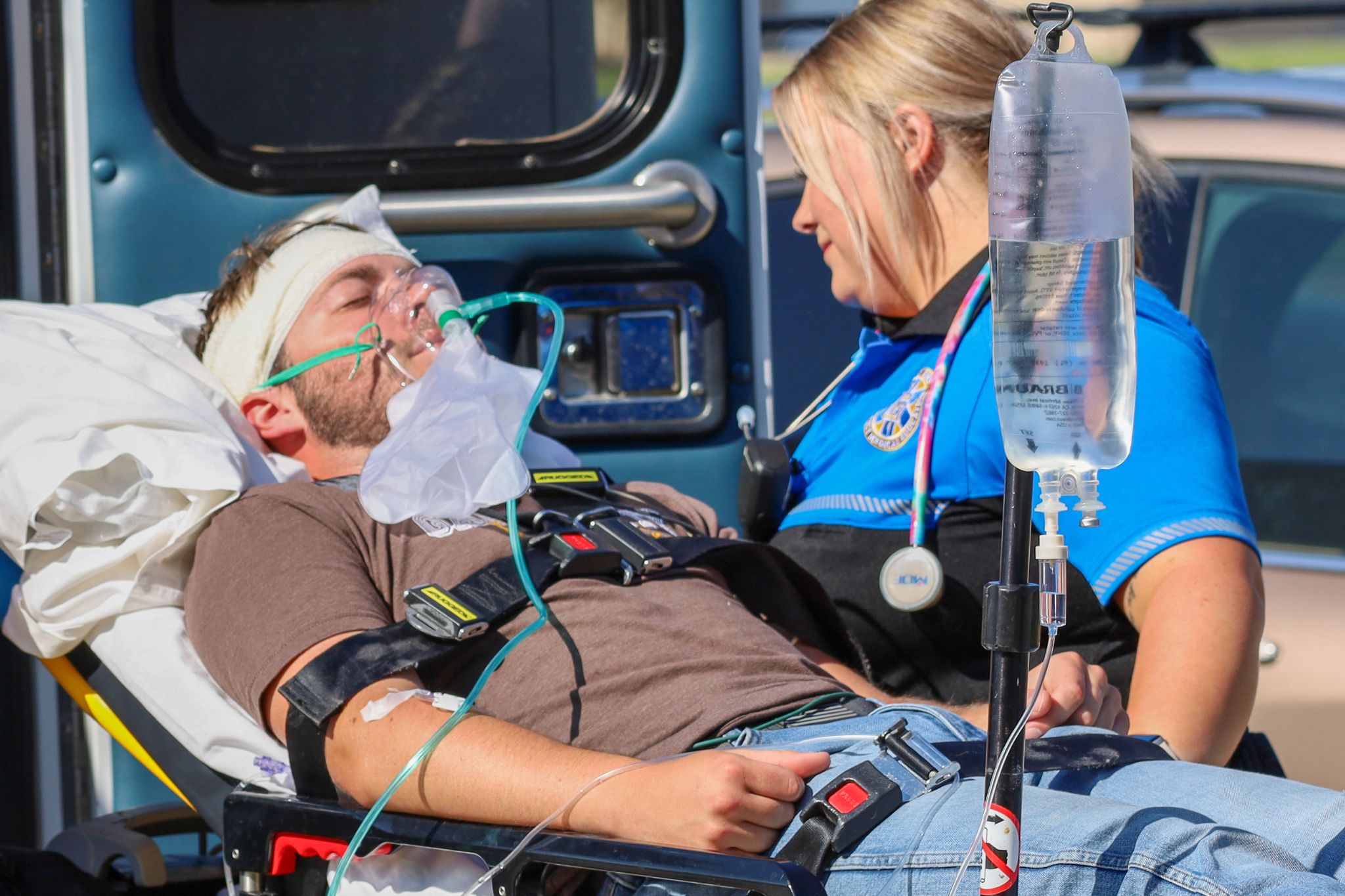
instruction. Students practice and apply their skills in realistic simulation environments
using high-fidelity mannequins that simulate a variety of patient conditions and responses.
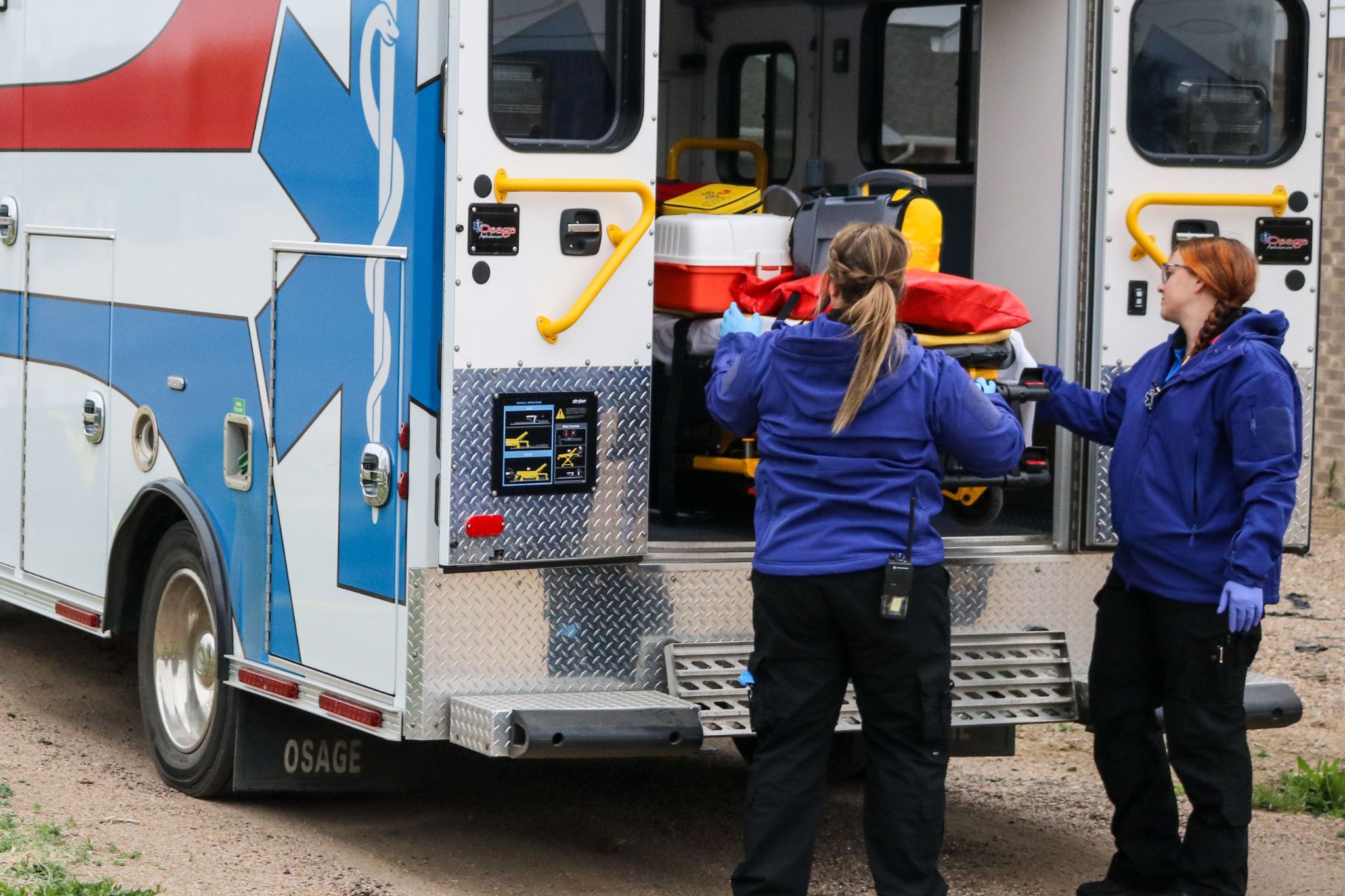
Career-Ready Paramedics Through intensive clinical training and field training, students develop the confidence
and expertise needed to make rapid, life-saving decisions and perform advanced patient
care in the field.
Program Highlights
Active Field Experts: Learn from active paramedics and EMS leaders who bring years of current experience
and best practices into the classroom.
Advanced Simulation: Utilize high-fidelity simulation labs to bridge the gap between
classroom theory and the realities of the field.
Purpose-Driven Career: This program focuses on building a lifelong career in serving
your community and making a tangible impact in emergency medicine.
"To prepare Paramedics who are competent in the cognitive (knowledge), psychomotor
(skills), and affective (behavior) learning domains to enter the profession."
You will need to submit your schedule availability to the program.
The program will assign your specific site location.
While we try to minimize travel distances, some travel may be necessary. You are responsible
for arranging your own transportation to the site.
The Paramedic Program adheres to the Garden City Community College policy regarding
Withdrawal and Refund Information. Please refer to the GCCC policy for the complete policy and procedures.
Technical Standards and Occupational Risks
See Handbook Technical Standards and Occupational Risks
*Advanced Placement: GCCC does not grant advanced placement within the Paramedic Program. Students must
complete all required paramedic coursework through the program. Transfer credit consideration
is limited to prerequisite coursework in accordance with the GCCC Transfer Credit
Policy.
Credentials
Minimum Credit Hours Required for Certificate = 50
Prerequisite: EMIC-108 with minimum grade of C or EMT Certified
Explore the full curriculum and courses using the link(s) below!
Certificate C in Emergency Medical Technician Technology - 50 Credit Hours
EMTT.CERTC - This certification combines classroom instruction with clinical rotations and real-world
response scenarios, giving students practical experience in high-pressure emergency
settings.
Associate in Applied Science - 65 credit hours
EMTT.AAS - This program provides the technical expertise and hands-on training needed to earn
national certification and enter the workforce as a practice-ready emergency medical
professional.
Other Pathways
Medical Doctor (MD or DO): Physicians lead patient care and can specialize in high-stakes fields like Emergency
Medicine or Trauma Surgery. Your time working under pressure as an EMT or Paramedic
provides the elite clinical exposure that medical school admissions committees actively
look for.
Requirements: Bachelor's degree (with heavy science pre-reqs like Organic Chem and Physics), MCAT
exam, and standout clinical experience.
Nursing Prerequisites → EMT → Paramedic → Bachelor's → Medical School
Nursing Prerequisites → Nursing (RN) → Flight Nurse OR PA School
Physician Assistant (PA): PA's diagnose, treat, and prescribe medications under a physician's supervision. The
Paramedic-to-PA pipeline is a highly strategic route because your field experience
directly fulfills the rigorous clinical hours required for admission.
Requirements: Bachelor's degree (any major, but includes your current science prereqs) plus 1,000–3,000
hours of direct patient care.
Scholarships & Fees
Kansas Promise Scholarship Eligible This program qualifies for the Kansas Promise Scholarship, giving you the opportunity
to earn a degree or certificate at little to no cost.
The Kansas Promise is a “last-dollar” scholarship that covers tuition, fees, books, and other program-related expenses not already paid by other scholarships or grants. It’s available to eligible Kansas students enrolled in high-demand programs. In return, recipients agree to live and work in
Kansas for two years after completing their program.
Program Cost SummaryTuition (46 credits at $132/hr): $6,072.00 Additional Program Fees: $2,952.00 Total:$9,024.00
Disclaimer: The costs listed are estimates for the current academic year and are subject
to change due to inflation and taxes. These totals do not include living expenses,
accommodations, or travel to clinical sites. Please verify exact, up-to-date amounts
with the Financial Aid or Business Office.
Career Outlook
Salary information is provided for general informational purposes only and represents
estimates, not guarantees. Actual earnings may vary based on factors such as experience,
location, and employer. Some careers may require education, certifications, or training
beyond programs offered at Garden City Community College.
Build the skills to deliver emergency medical care.
Current Status of Paramedic Program CoA (600150)
CAAHEP Accredited Paramedic Programs and CoAEMSP Letter of Review (LoR)
Programs track and report outcome measures annually to the Committee on Accreditation
for the Emergency Medical Services Professions (CoAEMSP).
The most current CoAEMSP Annual Report was for the calendar year 2025
The most recent success rate for the National Registry of EMT Paramedic/State
Cognitive exam was 80%. This is based off of 3 attempts.
The most recent positive placement rate for graduates was 100%.
Positive placement is defined by the CoAEMSP as 'Employed full or part-time in a related
field and/or continuing his/her education and/or serving in the military. Positive
placement is measured at completion of the program.
The most recent retention rate was 100%
Pass rate for 2025 was 80%
Year of Graduation
2025
2024*
2023*
Number of Graduates
5
0*
0*
Retention Rate
100%
0%*
0%*
Positive Job Placement
100%
0%*
0%*
NREMT Written Pass Rate
80%
0%*
0%*
*no cohort was held
Regulatory & Accreditation Contacts
Kansas Board of Emergency Medical Services (KBEMS)
Landon State Office Building 900 SW Jackson St, Suite 1031 Topeka, KS 66612-1228 785-296-7296
Committee on Accreditation of Educational Programs for the Emergency Medical Services
Professions (CoAEMSP)
8301 Lakeview Parkway Suite 111-312 Rowlett, TX 75088 214-703-8445
Commission on Accreditation of Allied Health Education Programs (CAAHEP)
9355 - 113th St. N, #7709 Seminole, FL 33775 727-210-2350