
GCCC Expands Hands-On Anatomy Learning with New Plastinated Specimens
Garden City Community College students have an extraordinary opportunity to study human anatomy through a new collection of plastinated specimens from von Hagens Plastination, founded by renowned anatomist Dr. Gunther von Hagens. The specimens provide students with an up-close, three-dimensional view of the human body and its complex anatomical structures.
Plastination is a preservation process invented by Dr. von Hagens that replaces fluids and fat in anatomical specimens with a rubber or polymer, such as silicone or epoxy resin. The process produces specimens that are dry, odorless, non-toxic, and permanently preserved, allowing students to examine authentic human anatomy in a durable, hands-on learning environment.
The plastinates are used throughout GCCC’s Biology and Life Sciences program, including Anatomy and Physiology courses. They give students the opportunity to see and study anatomical structures in ways that cannot be fully replicated through textbooks, illustrations, or traditional models.
GCCC also has a dedicated cadaver lab and a student Cadaver Team, providing students with an additional opportunity to take their study of human anatomy beyond the traditional classroom. The Cadaver Team consists of students who engage in hands-on anatomical study and work directly with specimens in the lab.
“The specimens are amazing, and it is a great privilege to have these at GCCC,” said Sara Gaut, Associate Professor of Science at GCCC and leader of the Cadaver Team. “Being able to provide students with access to authentic anatomical specimens creates an exceptional learning experience. They can see the structures they are studying in class and develop a much deeper understanding of how those structures relate to one another in the human body.”
The plastinates allow students to examine individual anatomical structures as well as the relationships between systems within the human body. Their three-dimensional nature provides a level of detail and perspective that can enhance students’ understanding of anatomy and physiology, particularly for those preparing for careers in health care and other science-related fields.
The purchase of the plastinates was made possible through GCCC’s Title III STEM grant, which supports initiatives that strengthen academic programs and expand learning opportunities for students in science, technology, engineering, and mathematics. The investment provides an additional instructional resource for students and enhances the hands-on experiences available through GCCC.
For the Cadaver Team, the plastinates add another dimension to an already hands-on learning environment.
“The Cadaver Team gives students an opportunity to go beyond simply learning anatomy from a textbook,” Gaut said. “They are able to apply what they are learning, ask questions, make observations and develop a greater appreciation for the complexity of the human body.”
For students pursuing healthcare careers, the opportunity to study authentic anatomical specimens helps connect classroom concepts with the practical knowledge they will need in their future professions. The experience also gives students a greater understanding of the human body before they move on to more advanced coursework and professional training.
The addition of the plastinates further strengthens GCCC’s hands-on approach to anatomy education and provides students with an exceptional resource for exploring the form, function, and interconnectedness of the human body.
For any questions, contact Sara Gaut at sara.gaut@gcccks.edu.
Copyright information: von Hagens Plastination © www.vonhagens-plastination.com / Gubener Plastinate GmbH, Germany.
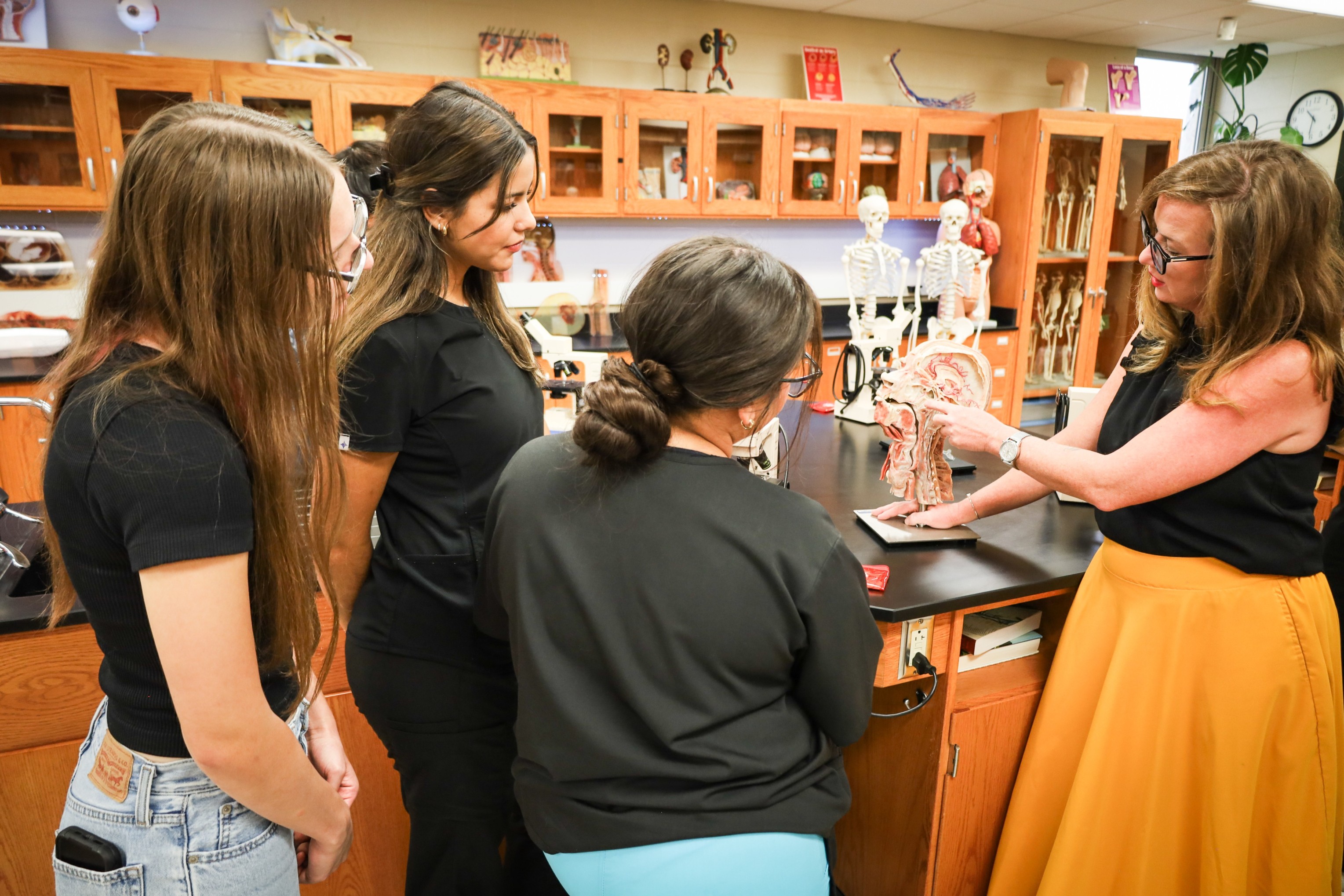
Sara Gaut, GCCC Associate Professor of Science, demonstrates a plastinated specimen of the human head to GCCC Cadaver Team students.
--
Garden City Community College exists to produce positive contributors to the economic and social well-being of society.